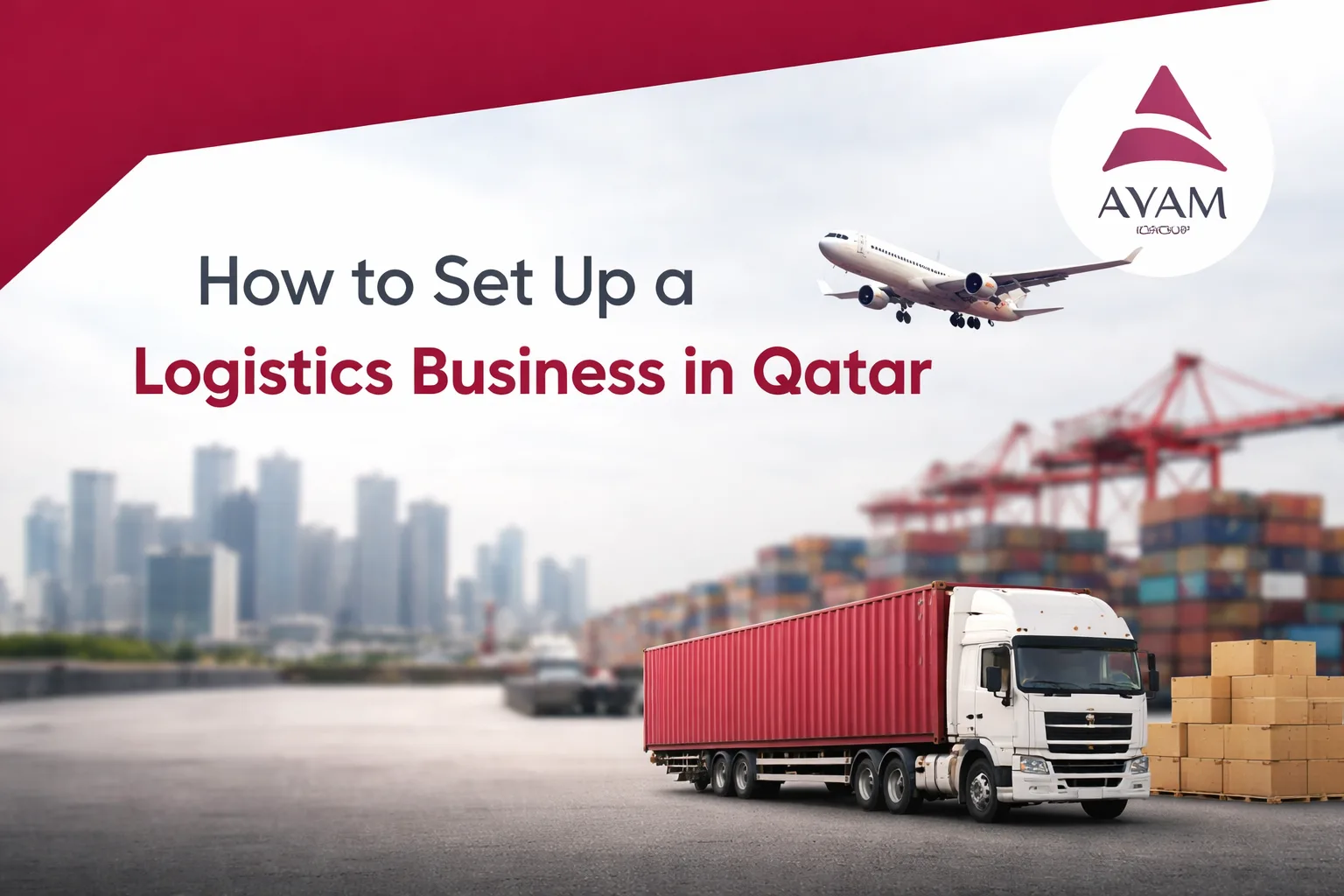
Qatar has emerged as one of the most exciting places for logistics entrepreneurs in the Gulf. With its prime geographical position that links Asia, Europe, and Africa, state-of-the-art infrastructure such as Hamad Port and Hamad International Airport, and a government that is actively pursuing economic diversification as part of Qatar National Vision 2030, the time has never been better to establish a logistics business in Qatar.
The Qatari logistics industry is estimated to be worth over $7.5 billion and is growing at a rate of over 7% per annum, and this trend is set to continue. Whether you are an investor in Qatar or an international entrepreneur looking to break into this thriving market, this guide takes you through everything you need to know to start a logistics business in Qatar.
What You’ll Learn in This Guide
- Why Qatar is a top destination for logistics businesses
- Key logistics sectors and business activities you can register
- Choosing the right legal structure: LLC vs Free Zone
- Step-by-step company registration process
- Licenses and permits required for logistics operations
- Costs to expect
- How Ayam Groups can fast-track your setup
Why Start a Logistics Business in Qatar?
Before diving into the process, it helps to understand why Qatar is worth your investment.
Qatar is the largest producer of liquefied natural gas in the world, which ensures that there is a steady demand for logistics and freight services. Apart from the energy sector, the fact that the country is investing in infrastructure and is a trading hub in the region ensures that the demand for logistics services keeps increasing every year.
Hamad Port, Hamad International Airport, and the Industrial Area are the main hubs in Qatar for the transportation and distribution of goods.These are some of the most modern infrastructure facilities in the region, ensuring that logistics companies have an efficient operational setup from the word go.
Apart from this, there is also a favorable business environment, tax benefits, and a government that is actively encouraging foreign investment. If you want a broader picture of what it’s like to start a business in Qatar, our complete roadmap covers everything from market entry to compliance.
Types of Logistics Businesses You Can Start in Qatar
Before registering your company, you need to define your core business activities. Qatar’s Ministry of Commerce and Industry (MOCI) requires that your Commercial Registration (CR) clearly reflects the services you will offer. Common logistics and transport business activities include:
- Road freight transport and cargo haulage
- Freight forwarding and shipping agency
- Customs clearance services
- Warehousing and storage (including cold chain / temperature-controlled)
- Courier and express delivery services
- Supply chain management and 3PL (third-party logistics)
- Vehicle leasing and commercial fleet rental
- Port and marine agency services
- Air freight and aviation cargo handling
- E-commerce fulfilment and last-mile delivery
Each activity type carries specific licensing requirements. Getting the activity definition right from the start saves significant time and cost during the application process.
Choosing the Right Legal Structure
Choosing the right structure determines your ownership rights, tax obligations, and how fast you can get operational. There are three main options:
A. Limited Liability Company (LLC) : Mainland The most common structure for businesses serving Qatar’s domestic market. Typically requires a Qatari national as a local partner (51% local ownership), with the foreign investor holding up to 49%. Grants full access to the domestic market and government contracts. Choosing the right local partner is one of the most critical decisions you will make, read our guide on how to secure a local Qatari partner or sponsor for LLC formation before proceeding.
B. Qatar Free Zone Company (QFZ) :The preferred route for investors wanting 100% foreign ownership. Benefits include zero corporate tax, full profit repatriation, and modern logistics facilities near Hamad Port and the airport. Best suited for international trade and re-export rather than domestic sales. Ayam Groups specialises in Qatar Free Zone company setup and can help you evaluate whether this route suits your business model.
C. Branch of a Foreign Company: If you already run a logistics business abroad, a branch office lets you operate in Qatar under your existing company name without full incorporation.Our company formation in Qatar service covers this structure in detail.
Step-by-Step Process to Register a Logistics Company in Qatar
Here is a comprehensive walkthrough of the registration and licensing process:
Step 1: Define Your Logistics Business Activity
stment, and the case for starting a logistics company in Qatar becomes very strong.The first thing you need to do before anything else is clearly define what type of logistics business you want to operate. This matters because licenses and permits in Qatar are issued based on specific business activities.
Common logistics activities you can register for include road freight and transport, freight forwarding, customs clearance, warehousing and storage, supply chain management, last-mile delivery, shipping agency operations, and project logistics.
Choosing the right activity from the outset prevents complications later in the licensing process and ensures your company is legally permitted to offer the services you intend to provide.
Step 2: Choose the Right Business Structure
Most logistics and transport businesses in Qatar operate as Limited Liability Companies (LLCs). An LLC requires a Qatari partner holding 51% ownership and a foreign investor holding 49%. However, in certain free zones such as Ras Bufontas or Umm Alhoul, 100% foreign ownership may be possible.
There is also the option of registering a branch of a foreign company, which allows an international logistics firm to manage Qatar-based operations linked to its parent entity abroad.
For foreign investors who want full control of their business without a local partner, setting up within a Qatar Free Zone Authority (QFZA) free zone is often the most attractive route. QFZA is suited for logistics, tech, aviation, and manufacturing companies, and benefits of Qatar free zone business setup include full foreign ownership and other operational advantages.
Choosing between a mainland LLC and a free zone setup depends on your ownership preferences, target market (local vs. export), and the scale of your operations. Not sure which is right for you? Read our analysis on whether Qatar is good for starting a business to help frame your decision.
Step 3: Obtain Commercial Registration (CR)
Once your business structure is decided, the next step is obtaining a Commercial Registration from the Ministry of Commerce and Industry (MOCI). This is the foundational legal document that recognizes your company as a registered business entity in Qatar.
The process begins with reserving a unique trade name through MOCI, the name must not conflict with existing registered business names in the country. After name approval, you submit the required incorporation documents, including shareholder details, the Memorandum of Association, and proof of a registered office address.
Once the CR is issued, your company can proceed with obtaining the remaining sector-specific licenses and permits.Be aware that documentation delays are one of the most common reasons businesses face setbacks , our blog on critical documentation delays to avoid in Qatar is essential reading at this stage.
Step 4: Apply for Your Trade License and Sector-Specific Permits
To establish a freight forwarding business in Qatar, one requires a trade license from the Ministry of Commerce and Industry (MOCI), which allows the business to be established and operate. A trade license also requires the endorsement of other relevant authorities depending on the type of logistics business,including the Ministry of Transport and Communications, the Qatar Civil Aviation Authority, Mwani Qatar, and the Qatar Railways Company. The office or warehouse location of your business should comply with safety and building requirements, and approval from the Civil Defense is required for safety approval.
If your business involves road transport for the movement of goods, you will also require a transport license from the Ministry of Transport. All vehicles used for commercial transport should be registered and approved for logistics use. The registration involves vehicle inspection, insurance, and the issuance of a commercial number plate. The company should also have a valid driver’s permit for all employees using a vehicle.
Need help staying on top of license renewals once you’re up and running? Our guide on how to renew your trade license in Qatar walks you through the process.
Step 5: Register with Customs and Port Authorities
If your logistics company is engaged in import and export activities or freight forwarding, it is mandatory to register with the General Authority of Customs in Qatar. This will enable your company to undertake customs clearance, documentation, and bonded warehouse activities.
Companies handling port activities are also required to register with the Qatar Ports Management Company, which is referred to as Mwani Qatar. Proper documentation of customs clearance will help avoid any delays in logistics activities.
It is essential to obtain these registrations at an early stage, as any delay in customs approval may affect the timeline of your operational launch.
Step 6: Set Up Your Warehouse and Operational Infrastructure
If warehousing and storage are part of your logistics offering, additional approvals are required beyond the standard trade license. The facility must comply with health and safety standards set by the Ministry of Municipality and Environment. Fire safety, ventilation, and pest control systems are required.
Beyond regulatory compliance, invest in the right operational infrastructure from the start, fleet management systems, warehouse management software, GPS tracking, and a capable local team. If you need a professional address or physical workspace to get started quickly, Ayam Groups offers office space for rent in Qatar to help you establish a compliant operational base without delay.
Step 7: Build Your Network and Go to Market
With licenses in place and operations set up, your focus shifts to business development. Qatar’s logistics market rewards businesses that build strong relationships with suppliers, freight agents, customs brokers, and end clients. Joining industry associations, attending trade events in Doha, and establishing a strong digital presence are all valuable strategies for growing your client base.
Having a bilingual website (English and Arabic), a clear service portfolio, and visible credibility through certifications will help you stand out in a competitive field. Consider pursuing ISO certification in Qatar, it signals quality and compliance to clients and partners, and can be a genuine differentiator in a competitive tender process.
Costs to Consider When Starting a Logistics Business in Qatar
While exact costs vary based on your business structure, activity scope, and the size of your fleet and facilities, typical expenses include commercial registration and trade license fees, sector-specific permit fees, office or warehouse lease costs, vehicle purchase or lease and registration, employee visas and labor costs, and insurance. Engaging a professional business setup consultant can save significant time and help you avoid costly compliance errors.
For employees and foreign investors, understanding what visas and work permits are required in Qatar is an important part of your total cost planning.
Key Regulatory Bodies for Logistics Businesses in Qatar
Understanding which authority governs which aspect of your operations is critical for smooth compliance:
- Ministry of Commerce and Industry (MOCI): Company registration, trade licensing, commercial activities
- Ministry of Transport: Road transport permits, vehicle registration, driver licensing
- General Authority of Customs: Import/export, customs clearance, bonded warehousing
- Mwani Qatar: Port operations and access
- Ministry of Labour: Work permits, employment contracts, labour compliance
- Ministry of Interior: Residence permits (Qatar ID) for employees
Common Challenges When Starting a Logistics Business in Qatar And How to Overcome Them
Starting a logistics business in Qatar comes with its share of hurdles. Being aware of them early gives you a clear advantage.
- Navigating Multiple Regulatory Authorities: Qatar’s logistics industry involves obtaining approvals from multiple government authorities at the same time – MOCI, MOTC, Customs, Mwani Qatar, and so on. This will cause a considerable delay in your startup process if not handled efficiently. The most effective way to deal with this situation is to hire an expert business setup consultant who can handle these approvals in parallel and ensure that everything stays on track.
- Finding a Reliable Local Sponsor : For mainland LLC formations, it is mandatory to have 51% local ownership by a Qatari national. It is essential to find a trustworthy local sponsor who shares your startup vision, not just someone to have their name on the paper.Our detailed guide on securing a local Qatari partner covers exactly how to do this safely.
- High Startup Costs: Fleet, warehouse space, licenses, visas, and insurance add up quickly. Many entrepreneurs underestimate the total investment and face cash flow problems early on. Build a financial model that accounts for at least six to twelve months of operating costs beyond initial setup, and consider leasing assets rather than purchasing outright while your business finds its footing.
- Intense Market Competition : Local and global logistics giants set the pace in Qatar’s market. Instead of competing in every aspect of the business from the very start, find a niche market, such as cold chain logistics, last-mile delivery, or oil and gas transportation, and establish a solid reputation in that area before expanding.
- Recruiting and Retaining Qualified Staff : Finding qualified drivers, warehouse managers, and customs brokers may prove to be difficult. By linking up with a trustworthy PRO agency for visa applications and providing attractive packages, you can minimize employee turnover and keep your business running smoothly.
- Cultural and Business Etiquette : Building relationships and trust are the key to doing business in Qatar. By taking the time to develop personal relationships, learning local customs, and adhering to Islamic business norms, your business will gain a definite competitive advantage with your customers and partners.
How Ayam Groups Can Help
Setting up a logistics company in Qatar can be a complex process involving several government departments, regulations, and considerations at once. At Ayam Groups, we have the expertise to assist entrepreneurs and businesses in setting up and expanding their operations in Qatar in the most efficient manner possible. Our services cover the full journey:
- Company Formation in Qatar
- Qatar Free Zone Company Setup
- PRO Services in Qatar
- Office Space for Rent in Qatar
- Accounting and Bookkeeping Services
- ISO Certification in Qatar
- Trademark Registration in Qatar
- Translation Services in Qatar
- Legal Attestation Services
Whether you are planning to set up a freight forwarding company, a road transport company, or a comprehensive logistics operation, Ayam Groups is your one-stop partner. Contact us today to get started.
Final Thoughts
Qatar’s logistics sector offers a rare combination of infrastructure quality, strategic location, government support, and growing trade demand. Whether you plan a small freight forwarding operation or a large-scale integrated supply chain business, the opportunity is significant — and the right setup ensures you capitalise on it from day one.
The registration process involves multiple steps and authorities, but with the right partner guiding you, it is far smoother and faster than trying to navigate it independently.
Ready to start your logistics business in Qatar? Contact Ayam Groups today for a free consultation. Our team will assess your business plan, recommend the right structure, and manage the entire setup process on your behalf.
Frequently Asked Questions
Can a foreigner own 100% of a logistics company in Qatar?
Yes, through a Qatar Free Zone company (QFZ), 100% foreign ownership is permitted. On the mainland, 100% ownership is possible in some activity categories under Qatar’s amended Foreign Investment Law, but logistics and transport activities may still require a Qatari partner. We assess your specific situation during consultation.
How long does it take to set up a logistics company in Qatar?
With complete documentation and professional support, the core registration process (CR + trade license) typically takes 3 to 6 weeks. Additional permits like the transport license, vehicle registrations, and customs registration may add 2 to 4 more weeks depending on the scope of your operation.
What is the minimum capital required?
For a mainland LLC, the minimum paid-up capital is typically QAR 200,000 (approximately USD 55,000). Free zone companies may have different capital requirements set by QFZA based on facility type and business activity.
Do I need a physical office to register a logistics company in Qatar?
Yes. A registered office or facility address is mandatory for both mainland and free zone companies. Ayam Groups offers flexible, affordable office space solutions to meet this requirement, including virtual office options for the initial registration phase in eligible structures.
Can I register a logistics company remotely from outside Qatar?
Certain steps can be initiated remotely, including document preparation and initial submissions. However, some stages such as notarisation, in-person ministry visits, and visa processing require physical presence in Qatar or a properly authorised power of attorney. Our team can guide you through what requires your presence and what we can manage on your behalf.