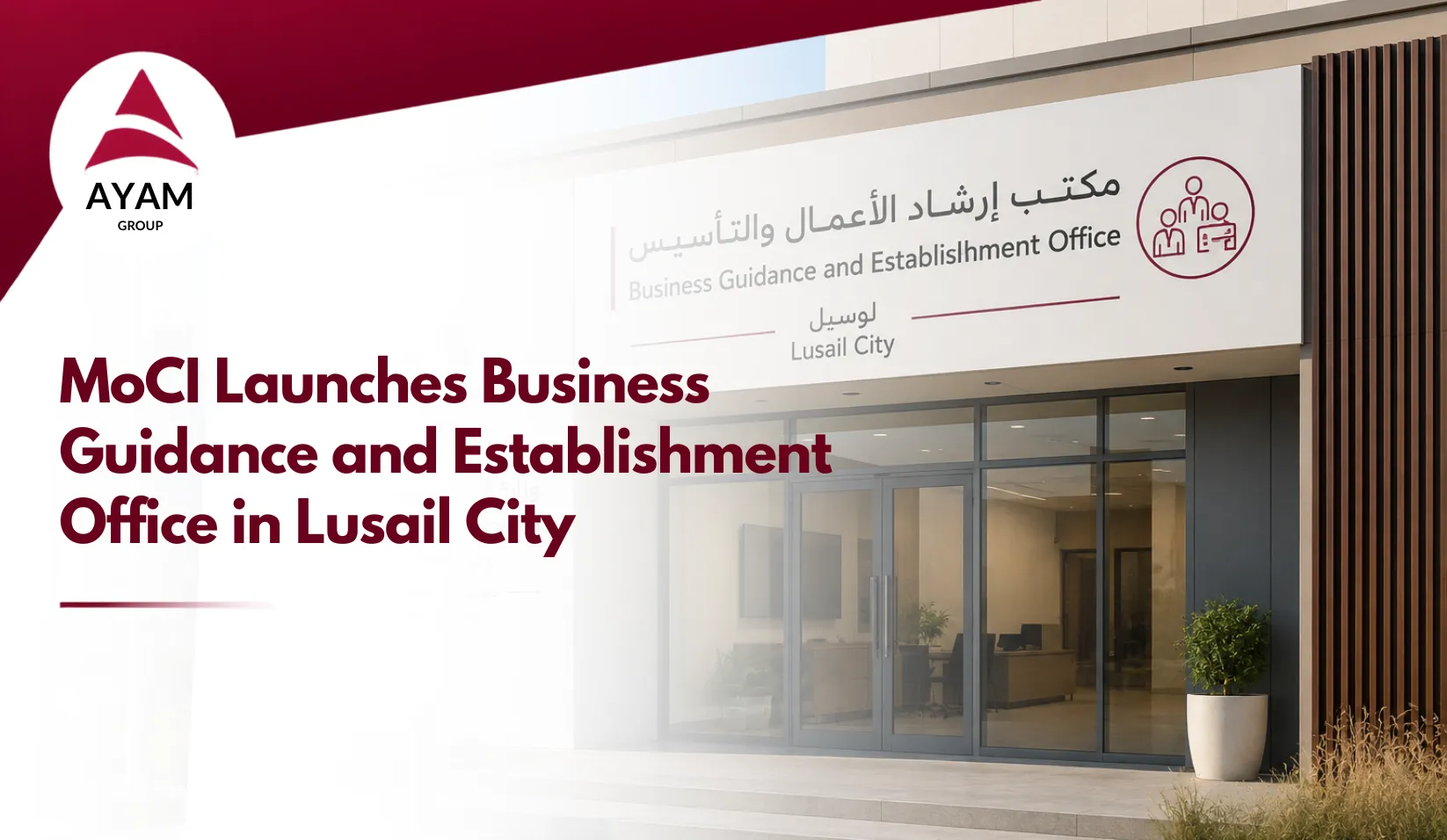
Walk down any street in Doha and you’ll notice a pattern: every shop sign, LED display, and billboard follows the same basic format, Arabic text given priority, clean structural mounting, nothing flashing in a way that would distract drivers. That’s not a design trend. It’s the result of a permitting system that touches almost every visible part of how a business shows up in Qatar.
You can’t put up a logo, a banner, or even a “30% off” sticker without approval from the right government body first. Get it wrong and you’re not just facing a fine, you could be told to take the whole thing down within days of an inspection. Here’s what’s actually regulated, who regulates it, and what you’ll need before calling a signage contractor.
Who’s In Charge of What
There’s no single office handling “advertising permits” in Qatar. Responsibility splits across a few authorities depending on what you’re displaying.
The Ministry of Municipality (Baladiya) handles physical signage, anything mounted on a building or tied to a lease location. The Ministry of Commerce and Industry (MoCI) governs commercial activity itself, including discounts, raffles, and promotional campaigns. Qatar Civil Defence gets involved wherever electricity or fire risk is part of the picture, which covers LED screens and most illuminated signage. It’s common for a single storefront launch to need sign-off from two or three of these before a screw goes into the wall, which is exactly the kind of multi-authority coordination a good PRO services partner is built to handle.
The Core Approval Categories
Signage and Logo Publishing
Your main shop sign carries the most scrutiny of anything you’ll display. Baladiya requires the name on your signboard to match your trade license exactly, no shortened versions, no stylistic spelling changes, no unofficial rebrands slipped in before the paperwork catches up. You’ll need to submit precise structural dimensions along with your lease contract, and the design has to hold up to Qatar’s climate, meaning wind load and weatherproofing aren’t optional extras.
LED and Digital Screens
Electronic displays are treated as a separate category entirely, and for good reason. Beyond the standard signage rules, LED and digital screens need to clear zoning requirements around brightness (a screen that’s fine in an industrial area might be flagged in a residential zone), plus a safety clearance from Civil Defence covering the electrical installation itself. Skipping this step is one of the more expensive mistakes a business can make, since screens are costly to fabricate and even costlier to remove and reinstall.
Vehicle Wraps and Billboards
Branding a company vehicle or booking billboard space both require permits, either permanent or issued annually depending on the placement. Vehicle graphics need approval on both sides of the vehicle, and there’s a hard rule around driver visibility: nothing in the design can obstruct the driver’s line of sight. Billboards follow a similar logic around location, sizing, and content review before they go up.
Commercial Promotions
Running a sale isn’t as simple as printing “SALE” on your window. Any discount, raffle, or special offer needs a license from MoCI, and there are real limits attached. Discounts need to reflect a genuine reduction of at least 10% against the standard market price, campaigns typically can’t run longer than 30 days without reapplying, and if you’re running the same offer again on the same product, the new terms need to be more favorable than the last round or the old conditions still apply. Prize-based promotions and raffles come with extra documentation, including proof that prizes were actually awarded once the campaign ends.
Temporary Advertisements
Short-term banners, event signage, and pop-up promotional material fall under temporary permits, usually valid for somewhere between 7 and 30 days. These often require a Landlord No-Objection Certificate (NOC) as part of the application, confirming the property owner is aware of and agrees to the installation.
Rules That Catch People Off Guard
Arabic takes visual priority on every sign and advertisement, and it has to be grammatically correct, not just present. Once a temporary permit expires, materials need to come down that same day, an expired banner left up is treated as unauthorized advertising, not a minor oversight. And nearly every application asks for the same core documents: your Commercial Registration (CR), Commercial License, and Computer Card. Missing paperwork is one of the most common reasons applications bounce back.
Why This Trips Businesses Up
Most rejections aren’t dramatic compliance failures. It’s a name that doesn’t quite match the trade license, an Arabic translation that’s technically off, or a promotional campaign that quietly runs past its 30-day window because nobody flagged the renewal. The real cost isn’t the fine, it’s the sign fabricated twice, the LED screen sitting unused while clearance gets sorted, the storefront that loses its street presence during launch week.
Let Ayam Group Handle the Hassle
Between multiple government portals and strict design guidelines, getting these approvals right on the first try takes more than good intentions. At Ayam Group, our PRO services cover ministry approvals for signage, LED screens, and promotions from start to finish, managing submissions across Baladiya, MoCI, and Civil Defence so your documentation, Arabic copy, and campaign terms are compliant before anything goes up. You focus on running your business. We’ll keep the approvals moving.
Frequently Asked Questions
How long does signage approval take in Qatar?
Most straightforward signage applications through Baladiya take around 2 to 4 weeks, though illuminated signs can take longer since they also need Civil Defence clearance.
Can I use only English on my shop sign?
No. Arabic must be the primary language on all commercial signs and advertisements, and it needs to be grammatically correct. English or other languages can appear alongside it, but Arabic takes visual priority.
What happens if I put up a sign without approval?
Unauthorized signage can be flagged and removed within 48 to 72 hours of an inspection, and the business may face fines on top of the cost of replacing the sign with a compliant version.
How much of a discount do I need to offer to get a promotion license?
MoCI requires that discounts reflect a genuine reduction of at least 10% off the standard market price for that item.
How long can a promotional campaign run?
Most promotions are capped at 30 days. Running the same offer again on the same product usually means the new terms need to be more favorable than the last round.
What documents do I need for these applications?
Nearly every application requires your Commercial Registration (CR), Commercial License, and Computer Card, regardless of which authority you’re applying to.
Does an LED screen need a different permit than a regular sign?
Yes. Beyond standard signage approval, LED and digital screens need to meet zoning rules on brightness and pass a separate electrical safety clearance from Civil Defence.